Wednesday, September 9, 2015

Primates by Jim Ottaviani and Maris Wicks


Informational text AND graphic novel? What better way to learn about three amazing women who, without formal degrees or really any training, paved the way for female scientific researchers and the study of primates. Jane Goodall, Dianne  Fossey, and Birute Galdikas's stories of tromping through jungles and closely observing their respective primates is both informational and appealing as presented. 

Ottaviani, J. (2013). Primates. NY: FirstSecond.

  1. Evaluation Criteria
    1. Style
      1. Presenting an informational text in the form of a graphic novel is incredibly appealing to young readers. It is sort of like combining a great picture book with a very well written non-fiction book. Beyond the author’s own style that is shown in regards to “distinctiveness in the presentation of the information,” the voice and attitude of the three women that the book tells the story of is very well presented. Their passion and strength is felt as the reader sees the comic book like images and reads the powerful words of their work. As the afterword stated, most of this book is true, but some is made up or altered, creating the fictional characteristics that help the book flow and help intrigue the reader to pick it up and continue to read it. This book is a great example of the “quality nonfiction that is just a worthwhile as a experience as a good novel.”


Tuesday, September 8, 2015

We are the Ship by Kadir Nelson


The history of the Negro Baseball league is sometimes trumped by its culmination in the form of Jackie Robinson. This book starts from the beginning of the league, providing quotes and commentary from players during the time to tell the story of the hardships of playing "America's sport" in a time when America was very much divided. Using powerful images to reinforce the emotions and situations of the time, this book reveals details of a very strained period in history through the love of baseball. 

Nelson, K. (2008). We are the ship. NY: Hyperion.

  1. Evaluation Criteria
    1. Organization
      1. This informational book is organized in “innings,” which both works chronologically for the information, but it also provides an extensive index if the reader is using the text more like an encyclopedia and simple wants to find information about one person or one event. Along with the main chapter titles, or “innings,” each chapter has a subtitle that briefly explains the type of information that is going to be included in that chapter. These “reference aides” let the reader both go in order of chapters, as well as jump around. Overall the organization “help[s] the reader to pick and choose what she or he needs;” in addition, there is a “clear sequence to the information” about the negro baseball league that will guide the reader through the book.


It’s So Amazing by Robbie H. Harris and Michael Emberly


The topic of where babies come from, what sex is, and what puberty is can be uncomfortable and complicated topics for parents to address. Through both scientific and child-friendly images, this book teaches children the facts about these very real and unavoidable stages of life. Great care is taken in the scientific terminology and graphics used to avoid the sexually-charged or incorrect language that children could hear from their peers. Instead, the focus is on education children on the science of the human body in an accessible and appealing way.

Harris, R. (1999). It’s so amazing. Boston, MA: Candlewick Press.

  1. Evaluation Criteria
    1. Design
      1. The design of this book both invites the reader to open it, as well as accurately informs the readers through visuals as they move through the text. The illustrations are all “appropriate and complement the text,” by making the very confusing, sometimes uncomfortable and unclear information regarding sex, birth, etc.very clear, concise, and informational. The images are painstakingly scientifically accurate, which “helps communicate the subject matter clearly and effectively.”

Tips for Parents

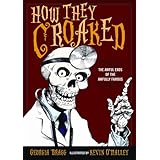
How They Croaked by Georgia Bragg


Did you know that Julius Caeser was tabbed by the people who were suppose to support him and Henry the VIII was left to rot in his room because no one had the nerve to inform the people that he had died? An interesting discussion of person's life can be told by starting with their death. In this intriguing book, the stories of famous people like Edgar Allen Poe, Albert Einstein, and Pocahontas are told with the focus being on their unique, and sometimes gory, deaths. Even if the reader thinks they know it all about these famous people, new details are revealed on every page. 

Bragg, G. (2011). How they croaked: The awful ends of the awfully famous. NY: Walker.

  1. Evaluation Criteria
    1. Style
      1. As the text states, an “author has his or her unique style or voice, and you look for that distinctiveness in the presentation of the information.” Bragg definitely exhibits a style all her own as she relays the information about the unique lives and deaths of famous people. To begin with, the illustrations are playful, yet dark in their colors and nature. The caricatures  of the famous dead people lighten the mood of this text about death. Also, the classic skull and crossbones and RIP’s remind the reader of the topic. Besides the illustrations, Bragg’s style can be observed in her syntactical choices. Although the text is fully informational, the language she chooses to use is of a light, friendly, youthful tone that can grab a young reader’s attention. The language is as if two young people were talking about the crazy deaths to each other. When Bragg talks about King Henry VIII “smelling like a giant rotten egg,” and that “some of his royal splendidness dripped out of the sides of the coffin overnight,” she creates very vivid imagery that very much appeals to youth readers.


Hitler Youth by Susan Campbell Bartoletti


Hitler's impact on the world is very well known and not easily forgotten. But, how did he accomplish his goals? In this deep and dark text, the readers learns of the millions of children and youth who were mesmerized by the propaganda spewed by Hitler and chose to follow him and perform his evil duties. With first hand accounts provided and images of this dark time in history, Bartoletti reveals a side to the Hitler legacy that many did not know existed. 

Bartoletti, S. (2005). Hitler youth. NY: Scholastic.

  1. Evaluating Criteria
    1. Accuracy
      1. The criteria that mostly directly fits this text is its accuracy on the subject of the children who dedicated their childhood the causes of Hitler. The textbook states that one way to determine the accuracy of an informational text is to see if the author has “sufficient background” in the area of the book. In the Author’s Notes, Bartoletti addresses the reader and explains how the reading of an article about Nazi’s under 21 intrigued her and lead to her further researching this topic. She reached beyond written research and actually traveled to the places where important events took place, all of which reinforce her credibility on the topic. Bartoletti also provides an extensive bibliography, as well as a shortened version called “Quoted Sources” so that the reader can easily identify and find the person who gave the direct quotes/interviews which were used in the book. And finally, in addition to the 1st person narratives provided, the author also includes actual photos from the time period.

Life for German Youth in the 1930s: Education, Propaganda, Conformity, and Obedience

Balloons over Broadway by Melissa Sweet


Ever wonder where those awesome Macy's Day Parade flying animals and characters came from? In this informative, yet entertaining picture book, the reader learns about Tony Sarg and his love up puppets. Beginning in his childhood, Sarg loved the movement and art of puppeteering. This passion led to his employment with Macy's to create creative, moving displays. Macy's loved them so much that they then commissioned him to create giant puppets for an annual parade. After moments of failure, Sarg adapts and changes his designs to eventually create the huge, floating faces that are so familiar today.

Sweet, M. (2011). Balloons over broadway: The true story of the puppeteer of Macy’s parade. NY: Houghton.

  1. Evaluation Criteria
    1. Design
      1. Another example of a great informational book turned children’s book, this texts grabs the reader’s attention from the beginning. All of the images and colors are very whimsical and fun, reinforcing the fun that Tony Sarg says he always had while “working.” Throughout the book, Sweet incorporates the lighthearted, drawn images depicting the biography of Sarg and the parade, as well as images directly from his Marionette book, and mix-media collages that Sweet says “...illustrate what it may have felt like to be Sarg’s world.” This clever use of random materials, colors, shapes, and textures helps reinforce the process that Sarg went through as he rose from a childhood fascination with the way things work, to creating the first inflatable parade “puppets,” which all helps “communicate the subject matter clearly and effectively.”


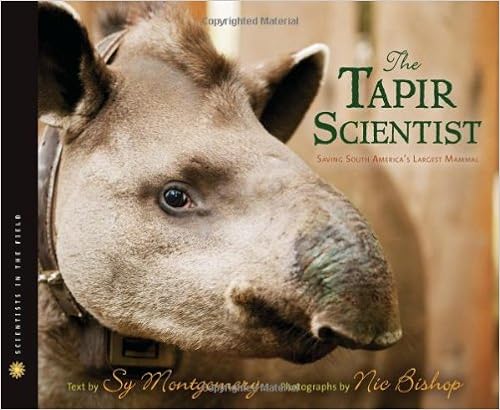
The Tapir Scientist by Sy Montgomery and Nic Bishop


What in the world is a tapir? That doesn't even look real. But, it is! Learn about the South American tapir as a group of scientists travel to the area to tag and conduct research on an animal that even the people of South American don't know much about. The beautiful images by Nic Bishop add to the mesmerizing look and story behind this unique animal. 

 Montgomery, S., & Bishop, N. (2013). The Tapir Scientist: Saving South America's Largest Mammal. New York, NY: HMH Books for Young Readers. 


  1. Evaluation Criteria
    1. Organization
      1. This book is organized more like a traditional information piece. The reference aids within both provide further information about the topic of tapirs, but also guide the reader to the different chapters within the book. The table of contents very clearly explains the chapter titles and describes them, as well as their corresponding page number. In addition, the bibliography and acknowledgement pages are also listed. This allows the reader to either read chronologically about the study of tapirs, or to jump to a section of interest. The layout of the information is very logical, moving from the beginning of the study to the conclusion. The images provided by Nic Bishop further enhance the organization of the text. His beautiful photographs provide examples of the other animals that the team encounters, as well as situations that the team encountered while tagging and tracking these tapirs for study. The images reinforce the information provided, created a very well rounded and organized text.

Science Meets Adventure Tapir Guide

Rosa by Nikki Giovanni


Rosa Parks is a women of great strength and determination. These things are beautifully depicted and discussed as the story of segregation, Park's faithful day on the bus, the Montgomery Bus Boycott that followed, and the impact that she had on the end of "separate, but equal," are retold in a fresh, new way. Although a children's book, the information is beneficial to all generations. 

Giovanni, N. (2005). Rosa. NY: Holt.


  1. Evaluation Criteria
    1. Style
      1. The style of this book immediately stands out. The text states that “Style is what makes an informational book a work of literature and not just a book of facts.”The story of Rosa Parks and the Montgomery Bus Boycott is beautifully told through the format of a story. This in itself is unique style, but also makes the text very accessible to a younger audience. The powerful words and tangible anger and pride are felt through this story, “reveal[ing] the author’s passion or enthusiasm for the subject.” Beyond the style of the story, the style of the illustrations is also very evident. The front cover reminds me of Klimt’s “The Woman in Gold,” showing a radiant glow around the powerful Rosa Parks. This same Klimnt style is seen through the text as each page’s images are pieced together with strong drawn images, different textures, both real and drawn, as well as the combination of gold tones and other earth tones. This book both feeds the mind and stretches the mind to reach out and learn more about the subject.

Me...Jane by Patrick McDonnell


Filled with the dreams and aspirations of Jane Goodall, Me...Jane tells the story of how she nurtured her love of animals and nature as a child and held tight to them so that she would grow up to fulfill her dream: living in Africa an helping the animals. Filled with whimsical graphics and actual images that Goodall drew, this book is a delightful reminder that dreams do come true. 

McDonnell, P. (2011). Me…jane. NY: Little, Brown Books for Young Readers.

  1. Evaluation Criteria
    1. Design
      1. This picture book turned informational book would grab a child’s attention before they even open a page. The illustrations are not only in a style like a coloring book, but the book also contains authentic images that Jane Goodall herself drew, as well as token images of her time period. As stated in the text, we must consider “whether the book is attractive, inviting, and readable.” The friendly interpretations of Jane and her stuffed monkey, the incorporation of drawings that Jane created herself as a child, and the warm colors invite the reader to enter Jane’s childhood to see how having a passion for something as a child can lead to great things.


Thursday, September 3, 2015

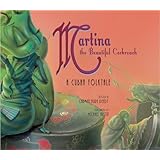
Martina the Beautiful Cockroach by Carmen Agra Deedy


Martina the Beautiful Cockroach by Carmen Agra Deedy

The time has arrived for Martina to begin searching for a husband. Being the most beautiful cockroach around, she won't have trouble finding a husband, but her grandmother warns her that she must work hard to find the RIGHT one. Taking her advice, Martina tests the suitors with a simple cup of coffee, and after a few fails, she finds her true love.

Deedy, C.A. (2007). Martina the beautiful cockroach. Atlanta, GA: Peachtree.

#10: Martina the Beautiful Cockroach by Carmen Agra Deedy
  1. Visual Element
    1. Texture
      1. From the flowers, to the scaley lizard, and to the tattered hat of the mouse, the textures in the graphics “enhance the realistic quality of the illustrations,” as stated in the textbook. This realistic quality makes the reader somewhat forget that the characters of bugs and creatures and transforms them into people of Cuba. The advice from the grandmother is enhanced by these realistic illustrations because then the reader is more willing to accept that the coffee test is a believable tradition in Cuba.
  2. Evaluative Criteria
    1. Setting
      1. As stated in the text, this story's setting is an “integral element for the story’s action and character development.” The overall setting is Cuba, which drives the concept of family and tradition in the story. Without Cuba, there aren’t Cuban grandmothers who can teach valuable lessons in life. more symbolically, the lamp post light that Martina and her family lives in could symbolize the truth, the truth that her grandmother was right and the place where Martina finds her true love, both things that drive the plot. But, I also believe that this story transcends the setting because the theme is so universal: true love should be tested to ensure it is really true love.


Tuesday, September 1, 2015

It's A Book by Lane Smith


When a tech savvy jackass encounters a monkey with a book, a clash of old school and new school occurs. The jackass can't quite seem to understand that books don't need wifi and you can't tweet form them. But, once he cracks the pages open himself, he is quickly sucked in. Despite his intense interest, he still never quite gets that "It's a book."

#9: It’s a Book by Lane Smith
  1. Visual Element
    1. Composition
      1. This book focuses on the division between new technology and old-school books. The clean lines, bright colors, and block style text when the Donkey is present greatly contrast the neutral colors, traditional text, and the ragged, crayon-like illustrations. The graphics alone could tell this story, but are enhanced by the graphic-like text.
  2. Evaluative Criteria
    1. Characters
      1. The character’s in this text are not only familiar animals, but are also familiar personalities of younger students. There is the child who was raised to love books and reading disguised as the intelligent monkey, and the child who lives and breathes technology embodied in the donkey. The mouse is the trust side-kick of a friend who only jumps in when needed. The monkey’s annoyed, yet still patient attitude about the donkey’s lack of knowledge about books sounds like a conversation between 2 very different grade school children. Even more than that, the characters make you laugh. The donkey’s idea of books is quite humorous, and the monkey’s final response is the icing on the cake.

Smith, L. (2011). It’s a book. NY: Roaring Brook
Meet the Author: Lane Smith


Book Trailer