Saturday, November 7, 2015

Love that Dog by Sharon Creech


Poetry isn't fun to read or write, or at least that is what Jack thought. But, his teacher Ms. Stretchberry continues to encourage him to read and interpret the poetry they read as a class, as well as to write his own poems. Jack slowly starts to find his own voice when he mimics a poem by Walter Dean Meyers, eventually meeting his favorite author and embracing a new found love of poetry. 


 Creech, S. (2001). Love that dog. New York, NY: HarperCollins. 


Love that Dog Discussion Guide


  1. Love that Dog by Sharon Creech
    1. The unique style of this book, as well as its relatively short length are aspects that will grab a reader’s attention. But, the poetic style of the entries might make readers reluctant. But, that is the point. The boy, Jack,  in the novel does not think poetry is good to read or that he can write his own poetry, but he quickly changes his mind when he finally reads a poem that makes him feel. This is the same feeling that I would hope students would take away from this novel: the realization that poetry can make an impact on a child and that everyone is a writer, even the ones who seriously doubt themselves.
    2. Creech has also written Hate that Cat: A Novel, Walk Two Moons, and Ruby Holler. Hate that Cat follows the life of the same boy from Love that Dog as he learns new elements of poetry that intrigue him, but also learns to deal with other events in his life through this type of writing, such as getting a new pet, losing that pet, and understanding his life with a mother who is deaf. But, the other novels by Creech are different in some aspects. Walk Two Moons and Ruby Holler are not written in the form of poems or journal entries, but instead in traditional novel form. But, the themes of her novels are very similar: children who are unaware of the ability to step out of their comfort zones and find happiness.

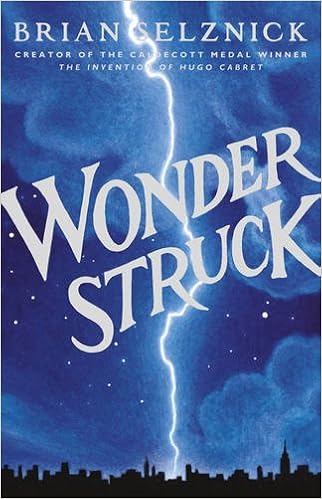
Wonderstruck by Bryan Selznick


Just at the moment that Ben reveals clues about the father he never knew, he suddenly losing his hearing in a freak accident. Twenty years prior, Rose, who was born deaf, wishes she wasn't stuck with her father. When she reads a headline that says her movie star mother will be in New York, she takes off on an adventure to find her true place in the world, just as Ben does years later. Told through illustrations and words, their stories have uncanny similarities that lead to an unexpected ending. 


Selznick, B. (2011). Wonderstruck. New York, NY: Scholastic. 


Virtual Field Trip Assignment


  1. Wonderstruck by Brian Selznick
    1. At first sight, this book might be greatly avoided by students because of the size of it. Tome-like, the book even intimidated me. But, after flipping through the pages, I quickly realized that half of the book was filled with elaborately detailed black and white illustrations. When a book has pictures, students are more willing to attempt to read it. This would be the first selling point. If that doesn’t hook them, explaining that the book is actually two stories weaved together, one done through pictures and one through the words. But, if that doesn’t convince a young reader to take the leap in reading this enormous book, the plot twist that brings the two stories together should convince them to take a chance with the book. Beyond the basic characteristics of Wonderstruck, sharing with potential readers that the young boy and girl who the two stories center on are searching for a place to belong and a chance to have a “normal” life, can show students that they may make a connection with these complex characters, pulling them into the beautiful stories of loss and searching that lead to love and belonging. 
    2. Three other books written by Selznick are The Invention of Hugo Cabret, The Marvels, and The Houdini Box. All of these books are very similar to Wonderstruck. All four texts are combinations of text and graphics, which are part of his signature style. They also focus on characters who don’t quite feel like they belong and embark on adventures to find their own places in the world.

Monday, November 2, 2015

Comics Squad: Recess! by Jennifer Holm


From Babymouse on an adventure just to make it to recess, to the lunch lady trying to survive the Pizza Monster, the Comics Squad's graphic novella style will bring new life to the mysteries of what happens during the golden hour of school: recess. Ninja skills that make new friends and run-ins with a magic acorn will grab the reader's attention in this unique collection of creative stories.


 Holm, J., Holm, M., & Krosoczka, J. (Eds.). (2014). Comics squad: Recess! New York, NY: 
            Random House. 

Book Trailer:


  1. Evaluation Criteria
    1. Style and Setting
      1. Like the previous text, the comic book and novella style of this test grabs the readers and keeps them interested in the wild, yet relatable stories of students, lunch ladies, a squirrels during recess. The compilation starts with a very believable and un-fantasy like story of average boys trying to be ninjas and exclude another child. But, as the short comics evolve into Babymouse meeting Zeus and going into battle, all things preventing her from making it to recess, the reader isn’t surprised or doesn’t believe the validity of these irregular and non-human leads.
      2. The setting of each of these stories is the most adventure filled place around: recess during school. This average place that is very familiar to all readers is transformed into extravagant adventures involving Babymouse trying to conquer her trials to be able to participate, Dogman saving the world from illiteracy, and the cafeteria lady trying to save the school from the evil pizza monster. Not only can the reader visualize the stories that happen during recess, but they also make a connection with the own adventures they have had during recess.

Rapunzel’s Revenge by Shannon and Dean Hale


Despite a privileged childhood, Rapunzel is curious about what lies on the other side of the wall to her mother's villa. She soon finds out that the mother in her dreams wasn't a dream and her life in the villa has been a lie. Soon, she begins a wild adventure to free herself from the chains of her "mother" in hopes of freeing her real mother from the evil grips of the mines. 

 Hale, S., & Hale, D. (2008). Rapunzel's revenge. New York, NY: Bloomsbury. 


  1. Evaluation Criteria
    1. Style and Character
      1. Although style as defined by the textbook doesn’t directly address a change in format of the fantasy book, but I believe that the graphic novel form both enhances the readability of the story, as well as the action behind the adventure. Also, the author’s choice to weave in three distinct fairy tales into one new tale shows their unique style.
      2. A strong female heroine is always a character choice that defies typical fantasy text, which tend to be driven by male leads. Also, the familiar tale of Rapunzel is turned on its head with a change from a female lead who needs to be saved, to a female lead who does all of the saving, creating a character that the reader “believ[es] [is] worth the adventure.


    Book Trailer


Sunday, November 1, 2015

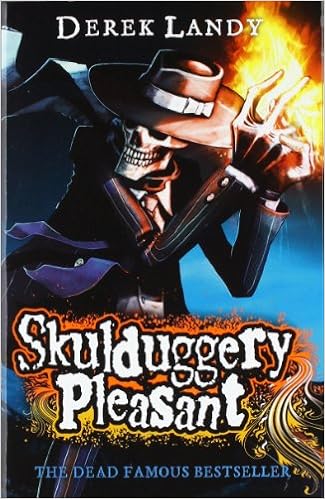
Skullduggery Pleasant by Derek Landy


Uncle Gordon has suddenly passed away and Stephanie is left as his only heir. But soon, she realizes that things may not be quite what they seem. With the help of an undead skeleton detective names Skullduggery Pleasant, Stephanie embarks on a quest to solve the mysterious, and possibly magical, death of her uncle. 

 Landy, D. (2007). Skullduggery Pleasant. New York, NY: HarperCollins. 


  1. Evaluative Criteria
    1. Characters and Theme
      1. Readers of this fantasy book can embrace the fact that the protagonist is a female who dives into  a dark adventure; readers can then enjoy the walking, talking, crime-solving skeleton who guides her through a quest that wasn’t willingly chosen, but instead was thrown at her when her Uncle suddenly dies.
      2. Theme is also a critical criteria of this fantasy book, even though it is the typical fantasy theme: good must triumph over evil. Stephanie and Skullduggery Pleasant are the good guys trying to prevent the bad guys, including Serpine, from unleashing evil upon the world. In the end, Stephanie and Skullduggery survive their adventure and prevail.

The Graveyard Book by Neil Gaiman


Bod was born to change the world, but when he toddled into a graveyard after the man Jack kills his parents and sister, his world begins to change first. He is taken in by the ghosts of the grave and raised in the ways of the undead. The skills he learns are soon put to the test when he learns that the man Jack is still searching for him and will go to the end of the undead earth to capture him and avoid the prophecy from coming to fruition. 


 Gaiman, N., & McKean, D. (2008). The Graveyard book. New York, NY: HarperCollins. 


  1. Evaluation Criteria
    1. Setting and Theme
      1. The setting of this fantasy novel is central to every element of the story: the graveyard. Every detail of the graveyard is mapped out for the reader from the moment baby Bod toddles into at. As the seasons change, the leaves fall in the graveyard and the snow begins to fall. The condition of each gravestones are revealed and the changing times outside of the suspended reality of the graveyard, all helping the reader “...see, hear, and feel the setting as they read the description.”
      2. The classic themes of good versus evil and good always wins drives the plot of this fantasy novel. The book begins with great evil: the man Jack is killing Bod’s family. But, good prevails and Bod is saved by the souls in the graveyard. He is further protected and raised by them until he is a young man. Despite the fact that the man Jack and his group of the Jack of All Trades is pursuing him to prevent the demise of their own evil group, goodness rises above and Bod, along with the help of others, is able to defeat the evil that has been chasing him his entire life.


Gregor the Overlander by Suzanne Collins


Life is rough for Gregor and his suddenly fatherless family. In the midst of doing laundry, both he and his sister, Boots, are sucked into the Underland, a world of giant, evil rats and bats that bond with humans for life. When the people of the Underland realize that an ancient prophecy brought Gregor to them, they convince him that he must take on the journey, which to his surprise, could also bring back his long-lost father.


 Collins, S. (2003). Gregor the Overlander. New York, NY: Scholastic. 


  1. Evaluation Criteria
    1. Characters and Plot
      1. The characters within the novel are easy to identify with as Gregor is an eleven-year-old boy who’s father disappeared and who is left to tend for his little sister Boots, and his elderly grandmother while his mom works to care for the family. Readers will not only “...feel a kinship” with Gregor, but they will also sympathize with the people of the Underland, who look different than humans above ground, are still filled with the same emotions and concerns as the readers. The reader “care[s] about what happens to them” as they are pushed into battle by giant rats and sent on a journey that could potentially save their world’s existence.
      2. Along with the characters, Gregor also fits the criteria of a fantasy book because of the plot that focuses on two epic journey’s: one to the Underland when Gregor and his sister fall down the dryer vent and the second being the journey with the Underlanders to fulfill the prophecy to save their lives. On the quest they encounter great danger and reluctant participants, but good prevails despite a great plot twist which turns someone who was supposed to be good, into the enemy.


    Lego Gregor Book Report