Sunday, September 25, 2016

I Will Save You by Matt de la Pena


  1. Summary: Kidd has suffered great physical and emotional trauma in his life. His dad was an abusive alcoholic towards both he and his mother, putting both of them in the hospital. But, his mother continually lets him back into their lives. Afte the last incident, Kidd’s mom can’t handle suffering or seeing her son suffer and chooses to kill her husband, along with herself. Kidd is taken to Horizons, a foster home for trouble kids. He meets Devon, a boy with a death wish who becomes his best friend. Before long, he can’t handle Horizons anymore and runs away to a beach side campsite where he becomes a maintenance worker. He meets Mr. Red and becomes his best worker and companion, but Devon finds him. He even finds the most beautiful girl in the world, Olivia. But Devon plans to hurt her and ruin Kidd’s life, so he throws him over a clff. Or so he thinks. In reality, Devon is Kidd’s other personality, a boy with a death wish. Devon is the voice inside Kidd’s head who wants to ruin him. So instead of Devon going over the cliff, Kidd is the one who goes over and almost dies.

  1. Wow. This was an incredibly powerful book. Like Invisible by Pete Hautman, the power of trauma to completely split someone’s life is incredible. This novel feels so real. I would consider this modern realistic fiction, but to some who read it, they might not believe how someone can create a separate person and truly believe they are there. Like Hautman, De La Pena shows how someone can suffer from psychological disorders, but try desperately to be “normal.” I feel like this novel also shows both the successes and the failures of the systems set up to help young people with psychological diseases in a way that doesn’t disregard the good things are happening, but does show how things can go very wrong in some instances. I read this book and though, “My students should read this to see that maybe their problems are not as bad as they think, or maybe if they are suffering like Kidd, they can see how to not handle these situations and how to persevere and survive.

 Peña, M. D. (2010). I will save you. New York: Delacorte Press. 


Sunday, September 18, 2016

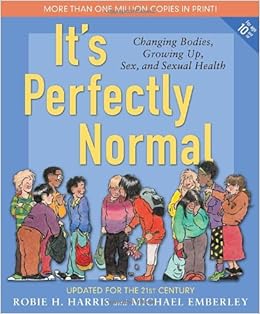
It's Perfectly Normal by Robie H. Harris and Michael Emberley


  1. Summary: The Bird and the Bee guide preteens and teens through the development of their bodies, the function of their body parts and everything in between. Taboo topics like homosexuality and masturbation are addressed in a very scientific and objective way to ensure readers understand the truth behind all of the rumors of the world. Other topics discussed include sexual abuse, abstinence, and what the scientific world is doing to find a cure for AIDS and HIV. The clever commentary of the Bird and the Bee keeps the subject light, but also brings up concerns and questions that preteens have and it helps guide them through the book.

  1. Textbook: The author of this book, Robie Harris, took her job seriously in regards to writing a factual text to help educate children about their bodies, all elements of sex, and human sexuality in a way that wasn’t shameful, overwhelming, or false. She consulted psychologists, scientists, clergy, students, and parents to figure out the needs of sexual health education. The result was this book. As stated in Dr. Lesesne and Dr. Perry’s video over non-fiction, this book also embodies all humans. Anatomically correct illustrations over different shapes, sizes, and colors of people ensures that all preteens and teens that read this can identify themselves and then become comfortable and confident when talking and learning about their bodies and sexuality.

Harris, R. H., & Emberley, M. (2009). It's perfectly normal: A book about changing bodies, 
growing up, sex, and sexual health. Cambridge, Mass: Candlewick Press. 

The following lesson plan from Discovery Education focuses on how 6th-8th grades can handle sexual pressure and lists It's Perfectly Normal as a suggested title to read.

Invisible by Pete Hautman


  1. Summary: Dougie and Andy are neighbors best friends, despite being completely opposite. Dougie is a loner who loves building model trains and tracks out of matchsticks. His best friend Andy is a jock and popular kid. They spend their spare time hanging out with each other and talk to each other nightly from their bedroom windows. Unfortunately, Andy isn’t alive anymore, but Dougie still sees him. The boys went into an abandoned home and set a fire to warm up. When the house goes up in flames, Andy goes back in to save a pocket knife he has bought for Dougie. From that day forward, Dougie has seen his best friend and suffered from PTSD. In a final act of anger and loneliness, Dougie’s obsession with fire causes him to burn down his own home.

  1. Textbook: This novel surprised me. Hautman did an amazing job of convincing the reader that everything in Dougie’s life was real, despite the subtle hints that it was not all fine. This novel addresses a major issue in regards to teenage PTSD, but from the sufferer’s perspective. Beyond the unique perspective is the realization that not everyone survives PTSD or is able to cope with the event that caused it. Dougie doesn’t take his medicine and continues to see Andy as a real person, even blaming a bomb threat phone call on him. His depression culminates in destroying his prized train models and burning his house down. Readers may feel like this isn’t realistic fiction, but it is. It is just the side of the world that no  one talks about and that people don’t think truly exists.

Hautman, P. (2005). Invisible. New York: Simon & Schuster Books for Young Readers.


Other novels by Hautman:


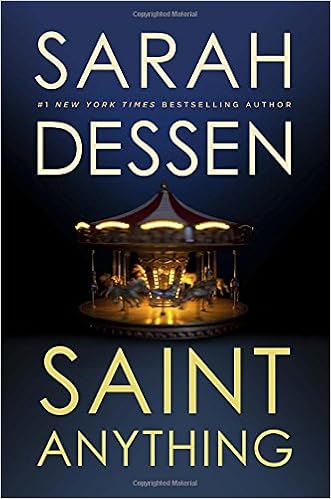
Saint Anything by Sarah Dessen


  1. Summary:  Sydney has always been in the shadow of her older brother, Peyton. Despite being convicted of hitting a boy on his bike while driving drunk, Peyton continues to be the center of attention due to him now being in prison and separated from them. Sydney is concerned for the boy he hit, but her parents continue to see Peyton as the victim. One day, after a long day at her new public school, she wanders into a local pizzeria and meets a family who changes her life. Layla and Mac immediately accept her into their family, hiring her to work for them and hanging with her in their free time. Sydney quickly falls for Mac. The Chatham family has their own issues, including a daughter who failed in her career in ice skating and a mother suffering from MS. But instead of fighting and  falling apart, they grow together, the opposite of Sydney and her family.

  1. Textbook: Another great example of realistic fiction for the current teen reader, this novel appeals to the reader of romance. Although this novel has darker themes, including drunk driving and life-threatening disease, the Sydney and Mac are just two teenagers who fall in love despite being from different backgrounds and both suffering from lack of self-confidence. Readers can identify with Mac’s self-consciousness due to once being overweight and Sydney’s need to reach out to her brother’s drunk-driving victim in search of peace. Mac’s weight issues is a unique view on body consciousness that isn’t normally addressed because society tends to think only females suffer from body shaming. But Dessen is able to discuss this topic through the use of a character who has learned to lose weight the right way and learns to have a positive body image.

 Dessen, S. (2015). Saint Anything: A novel. New York, NY: Viking Books.


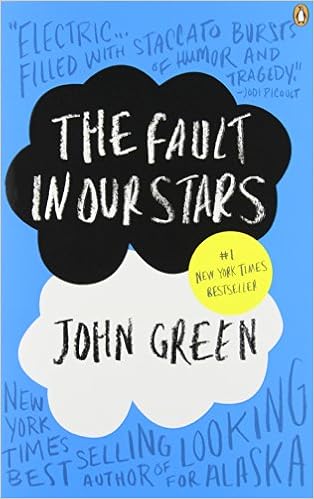
The Fault in Our Stars


  1. Summary: Hazel Lancaster has cancer. Her life isn’t normal or enjoyable at this point in her treatments. But suddenly, at her children’s cancer group meeting, her world is rocked by the entrance of Augustus Waters. Although Augustus is also a cancer patient, they quickly fall in love. Hazel is obsessed with a book that involves a little girl dying from cancer and her one wish is to meet the author, Van Houten, and ask him questions. Augustus uses his Make a Wish to get her to Amsterdam, but her dream is quickly crushed because the author has no interest in answering her. Over the course of their relationship, Augustus becomes more ill as his cancer returns. Soon, Augustus dies. But his love and life has taught Hazel so much about life and why everything is worth it. At Augustus’ funeral, Van Houten shows up. He reveals that the book Hazel is so obsessed with is based on the cancer and loss of his own daughter. This helps her understand his anger.

  2. Textbook: A criticism of this novel has been the idea that the teenagers don’t mirror actual teenagers when it comes to their intellect, knowledge, and how they handle having cancer. But, I completely disagree. Hazel, August, and their friend Isaac, although all suffering from things not every teenager suffers from, their way of handling these conditions shows their maturity. To assume that “normal” teenagers can’t be mature or intellectual is cutting them short. Instead, I see these characters as clearly representing a niche in the teenage world, a niche that includes young people who have to deal with very adult things at a young age. This realistic piece of fiction also deals with an area of our society that people don’t openly talk about: childhood cancer. Green is able to discuss the realities of the disease without making it seem like he is simply being sympathetic.

Green, J. (2014). The fault in our stars. New York, NY: Penguin Books.


Monday, September 5, 2016

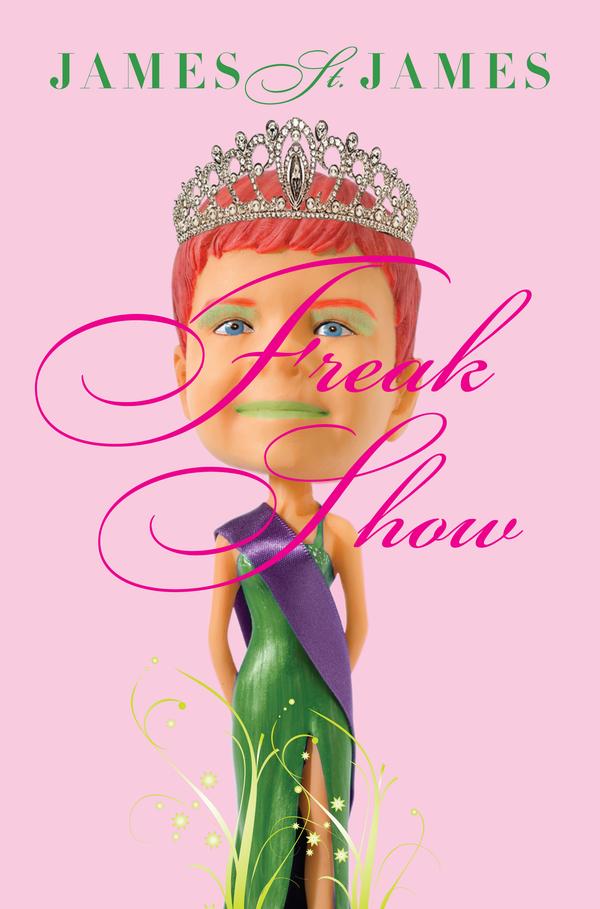
Freak Show by James St. James


  1. Summary: Billy Bloom is an outrageous, free spirited, teenage drag queen. Life is good until his mother quickly kicks him out and he is forced to move in with his father in Florida and attend an extremely unaccepting school of rich kids. From day one, he is called “faggot” and tormented. Despite this, he never changes his outside appearance. One day, he is literally beaten to a pulp, bones broken, internal organs damaged, all because people think he is a freak and gay. His savior comes by the name of Flip Kelly, the local football star and most popular kid in school. From that day on, Billy and Flip spend almost every day together. Billy falls in love with Flip and Flip can’t decide what he is: straight or gay. After their friendship is temporarily shattered due to a caught-on-camera make-out session, Billy runs for homecoming queen to bring awareness to the hate at the school. He loses, but brings courage to so many students, including Flip Kelly.

  1. Textbook: This is another example of realistic fiction that addresses a seemingly taboo topic of cross-dressing and homosexuality in regards to teenage boys. Stereotypical southern high school that is filled with rich kids who think they are superior spend their days tearing down people who are different without even a blink of an eye from a teacher. Billy is an extremely strong character who uses his personal strength to help others realize their own differences and embrace them. Even though he considers himself a Super Freak, he is an “everyman.” He is any kid in the world who is picked on for being different, but instead of letting it overtake him, he uses it as a way to rise above the bullying and become a spokesman. The tone of this books is so incredibly bubble, it was almost nauseating at first. The stream of consciousness was hard to get use to at first, but as Billy’s character was revealed more and more, it became like reading his journals and really knowing him.

James, J. S. (2007). Freak show. New York, NY: Dutton Children's Books.


Sunday, September 4, 2016

100 Sideways Miles by Andrew Smith


  1. Summary: Fin Easton is a character in a book. Well, at least he feels that way. His father wrote one best-selling book and a character with two different colored eyes, who suffers from epilepsy and has a unique scar is the lead. Coincidentally, these are all characteristics of Fin. His best friend is Cade Hernandez, a typical high school boy who loves baseball and sex. College is on the horizon, but Fin can’t seem to figure out who he is away from that character in the book. He soon falls in love with the new girl in town, Julia, and begins to take risks. Julia and Fin have a whirlwind love affair before suddenly moves back home. Cade and Fin take off to visit Oklahoma and the college they plan to attend together when suddenly they are jumping into a raging creek in the middle of a storm to save a grandfather and his grandson trapped in a car. Hero status helps open Fin’s eyes to new adventure and who he really is.

  1. Textbook: The setting of this novel is barren and haunted by a strange past. It isn’t the California of people’s expectations. Instead, It is a dessert-like canyon that was involved in a horrific dam break that caused many people to die and an entire town to be washed away. This is connected to Fin’s life because when he suffers from an epileptic seizure, he sees twin girls who died in the flood. He is haunted by them and struggles to figure out why. Also, Fin’s life is blank and boring because he feels stuck in the character of his dad’s book and unable to have his own adventures. Cade and Julia help drag him out of this show him adventure and life. This contrast of life and the setting keeps the reader engaged in the growth of Fin.

Smith, A. (2014). 100 sideways miles. New York, NY: Simon and Schuster.


Andrew Smith talks about his book 100 Sideways Miles.


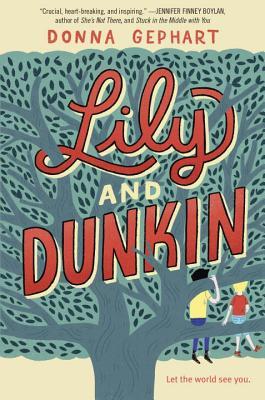
Lily and Dunkin by Donna Gephart


  1. Summary: Lily McGrother has known most of her life that she is a girl trapped in a boy’s body. As 8th grade approaches, the need to be her true self fills her with agony daily. She is picked on at school and not accepted by her father. But one day, she puts on a dress and steps outside to help her dad get the groceries and her life changes. A boy named Norbert Dorfman sees Tim (Lily) in that dress and doesn’t forget those blue eyes on the first day of school. Their friendship grows, despite some bumps (Norbert aka Dunkin joins the basketball team and hangs with the boys who pick on Lily) and soon Lily learns that Dunkin is bipolar when he quits taking his medicine in hopes of being a better basketball player. They are both able to accept each other’s differences and be their true selves despite how the world sees them.

  1. Textbook: Middle school gets getting picked on for being different and struggling with growing up and issues with parents: this is a great example of realistic fiction that revolves around the very current topic of transgender children and kids suffering with mental illness. This novel is able to address both topics in a way that helps the reader understand the issue, but also teach the truth about both being transgender and bipolar. Never does the author take on a negative tone in regards to either topic; she even brings to light a background issue for one of Lily’s aggressors: his father reams him after a basketball game and Lily recognizes that the way Vasquez treats her is possibly because he is treated that way by his father, as well as has never been taught not to act that way.

Gephart, D. (2016). Lily and Dunkin. New York, NY: Delacorte Press.


Below is an incredible set of lessons over this novel to help students understand the topics of this book in an educational way.

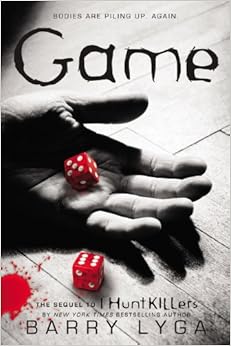
I Hunt Killers by Barry Lyga


    1. Summary: Jazz’s childhood was anything but normal. His dad was an infamous serial killer who racked up over 100 kills before being caught by small town Sherriff G.Williams in Lobo’s Nod. Jazz has spent the last four years of his life caring for his grandmother and avoiding two future scenarios: him being removed from his grandmother’s care and placed into the foster care system and becoming just like his father. His best friend Howie and girlfriend Connie keep him grounded in reality and focused on forgetting his gruesome past. But when murders begin again in his small town, his killer instincts and inside knowledge allow him to help G. Williams catch a copy cat killer whose ultimate goal is to convince Jazz he IS a serial killer and needs to live up to his father’s legacy.

    1. Textbook: The character of Jazz is so incredibly complex. He was literally raised up and trained to be the perfect killer. He saw incredible horror and even figures out as he grows up that he was involved in his own mother’s death by being manipulated by his father. On the flip side, he is a high school senior with a best friend and a girlfriend, trying to figure out how to grow away from his past. Watching him struggle with his own feelings and then overcome his own beliefs about himself to become the good guy make this novel incredible reader friendly and intriguing. You are drawn to his development and hope things turn out well for him.

Lyga, B. (2012). I hunt killers. New York: Little, Brown.


I Hunt Killers is part of a trilogy. The following are the two other novels.


Saturday, September 3, 2016

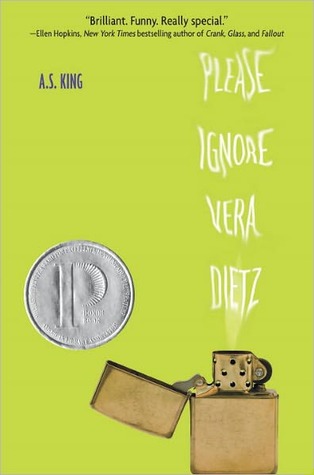
Please Ignore Viera Dietz by A.S. King


    1. Summary: Vera and Charlie have been friends their entire life. Growing up just across the woods from one another, they both are drawn to each other due to their broken home lives: Vera’s mom left her dad unexpectedly and Charlie’s dad abuses his wife on a regular basis. As they grow up, their friendship is pushed to the breaking point when Charlie starts dating Jenny Flick, and evil, lying girl who puts a wedge between Charlie and Jenny. Jenny goes psycho and in the end, burns down a pet shop and Charlie is killed. Vera is wracked with guilt because she knows Charlie wasn’t the one who set the fire and Jenny is responsible for his death, but she cannot muster up the courage to tell everyone the truth.

    1. Textbook: This novel creatively uses omniscient point of view of providing commentary from Charlie postmortem. This creatively engages a character in the life of Viera and connects the ghosts she sees of him to his story that is being told. This movement between who is speaking will keep readers engaged, especially when Viera leaves information out and it is later revealed to them via Charlie’s ghost. Beyond devices, this novel establishes itself as realistic fiction through the very real lives of Viera and the other characters. She struggles with losing her best friend, keeping a big secret, and trying to mend the relationship between her and her father. These are all common feelings and situations amongst teenagers.

 King, A. S. (2010). Please ignore Vera Dietz. New York: Alfred A. Knopf. 


Book Trailer