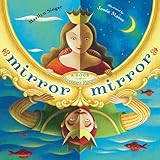
Is there always only one side to a story? In this beautifully illustrated text, an alternate view on classic fairy tales is revealed in verse form alongside the original point of view. From the sadness of the evil Stepsisters in Cinderella as they watch from the corner of the ball, to the Bears being the ones violated by Goldilocks. This book puts a unique twist on old classics.
- Visual Element
- Composition
- Line, shape, color, and texture come together in these beautiful illustrations that bring the concept of reverse verse to life. Each illustration is neatly divide into four quadrants or in halves that depict both sides of the story in a way that is not only appealing to the eye, but also reiterates the duality of the original fairy tale. In “Cinderella’s Double Life,” the lightness and darkness in each side of the illustration reinforce the positive and negative feelings of the moments. Also, the transition from each picture using continual lines makes the two starkly different images flow together.
- Evaluative Criteria
- Illustrations
- Because this book doesn’t follow a continuous plot line, but instead uses each pair of pages to depict a single story in two versions attached to a double image, the illustrations not only complement the reverse versus, but also can be looked at without the poems and the reader can still understand the duality of these classic fairy tales. Readers can immediately see both sides of the story, as well as quickly recognize the classic elements of the tales they have read or heard before. In addition to the full illustrations, the use of red and blue text for the poems is an additional illustration, symbolizing the more positive or usual side of the story in contrast to the heavier, darker side of the story. Finally, the individual illustration at the bottom of the text pages uses one significant image from the classic tale to sort of summarize the text and focus the imagery.

No comments:
Post a Comment