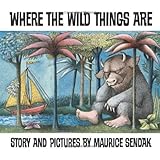
After making his mother upset, Max is sent to his room without dinner. As he sits alone, his room transforms into a wild forest and he travels to the place where the Wild Things are. He stomps, and romps, and causes a ruckus as the King of the Wild Things. But, he misses the love of his mom and the taste of her food. His anger turns to sadness, and his imagination brings him back home to his comfy room and warm food.
- Composition
- The author’s use of line, color, and texture bring the story to life and reflect the movement from anger, to excitement, to sadness, and finally to happiness as Max travels. They work together create a realistic journey through the forest and ocean, as well as rambunctious interactions between Max and the Wild Things. Although the Wild Things are real things, the illustrations reveal their individual characters in regards to textures of scales and feathers.
- Evaluative Criteria
- Character
- Sendak states that the book touches the “...vagrant child that lurks in the heart of all of us.” Max is an incredibly relatable character for children. He just wants to be rambunctious and wild, but his mother doesn’t have the patience for it and punishes him by sending him to his room. When he is left there in solitude, his anger makes him travel far away to a place where HE gets to make the rules. Despite all the fun, he just wants to the love of his mom and some tasty food. This is the circle that represent the child-parent relationship.

No comments:
Post a Comment